Many people grind or clench their teeth without knowing it, usually at night, and the first clues are indirect: a sore jaw in the morning, frequent headaches, worn or sensitive teeth, or a partner who mentions the sound. Over time, this constant force does real damage, not only to natural teeth but to fillings, crowns, veneers, and implants you may have invested in.
The usual protection is a custom oral appliance, and here the terms get confusing. “Nightguard,” “mouthguard,” “bite splint,” and “occlusal guard” are often used interchangeably, but they are not all the same. Understanding the difference helps you get the right one for your situation.

What Grinding and Clenching Do
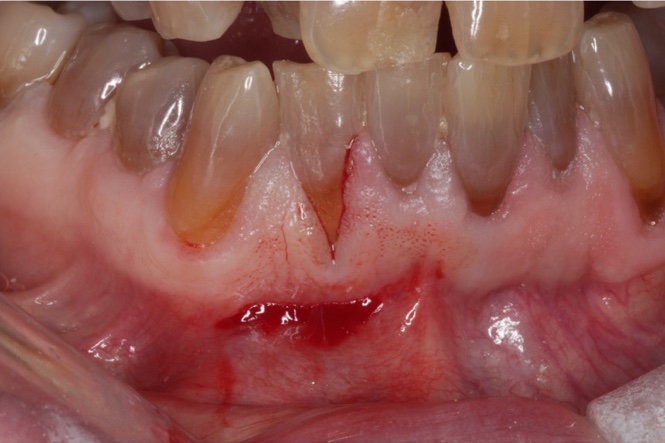
Grinding and clenching, known clinically as bruxism, generate forces far greater than normal chewing, and they do it for hours while you sleep. The results build up quietly: flattened and worn teeth, tiny cracks, increased sensitivity, sore jaw muscles, headaches, and sometimes jaw-joint pain.
For anyone who has had restorative work, the stakes are higher still. Unchecked grinding can chip a veneer, fracture a crown, or shorten the life of an expensive restoration. Protecting your teeth also means protecting the investment you have already made in them.
Nightguard vs. Splint: The Real Difference
| Nightguard (occlusal guard) | Bite splint | |
|---|---|---|
| Main purpose | Protect teeth from grinding wear | Manage bite and jaw-joint issues |
| Typically worn | At night | Day or night, as prescribed |
| Fit | Custom or over-the-counter | Always custom, precisely adjusted |
| Best for | General grinding and clenching | TMJ symptoms, bite therapy, complex cases |
In short, a nightguard is mainly a protective barrier against grinding wear, while a splint is a more precisely designed therapeutic appliance used to manage how the jaw and bite function. There is overlap, and the right choice depends on what is actually going on.

Why a Custom Appliance Is Worth It
Over-the-counter guards are inexpensive and better than nothing in a pinch, but they are bulky, fit poorly, and can even shift your bite if worn long-term. Because they do not fit precisely, many people find them uncomfortable and simply stop wearing them, which protects nothing.
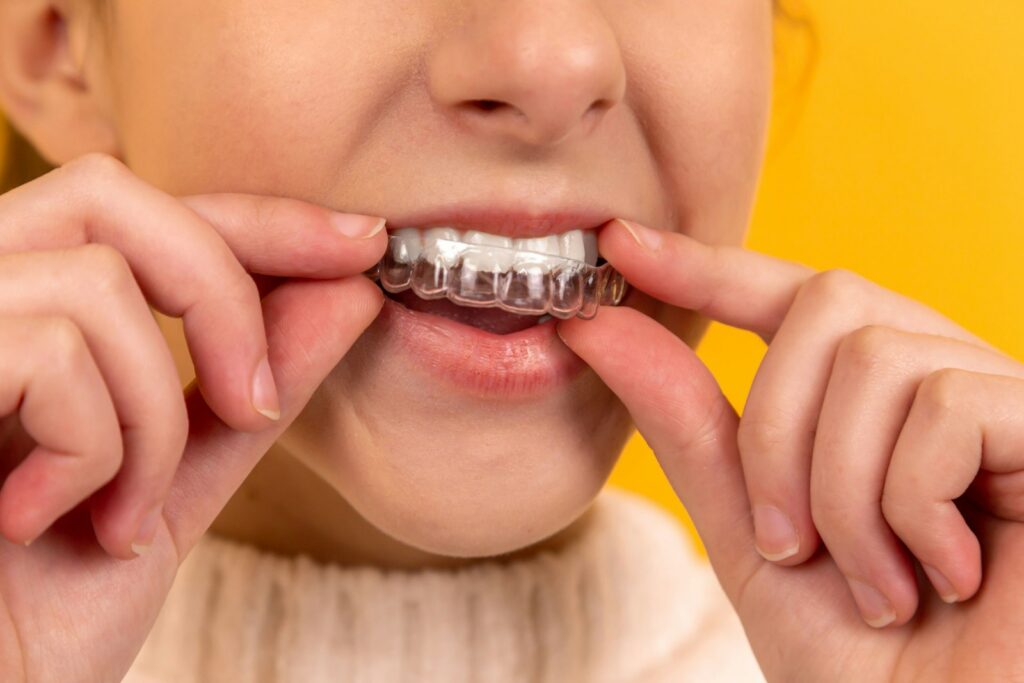
A custom guard is made from an impression or scan of your teeth, so it fits accurately, feels comfortable enough to actually wear, and distributes force the way it should. For protecting natural teeth and especially dental work, that precision is the whole point.
Signs You Might Need One
A few common signals are worth paying attention to:
- Waking with a sore jaw, tight facial muscles, or a dull headache.
- Teeth that look flattened, worn, or chipped, or that have become sensitive.
- A partner who hears grinding at night.
- Cracked or repeatedly failing fillings, crowns, or veneers.
- Jaw clicking, tenderness, or difficulty opening comfortably.
If several of these sound familiar, it is worth mentioning at your next visit so the cause can be checked rather than just the symptoms.
Caring for Your Guard
A custom guard lasts longer with a little care. Rinse it and brush it gently after each use, let it dry, and store it in its case away from heat, which can warp it. Bring it to your checkups so it can be inspected for wear and your dentist can confirm it still fits and protects as it should.
Even a well-made guard does not last forever. The material gradually wears, especially with heavy grinding, and its fit can change over time. Replacing it when it is worn is a small, routine cost compared with repairing the teeth or restorations it exists to protect.
Protecting an Investment in Your Smile
This matters most if you have had significant restorative or cosmetic work. A well-made guard is a small, sensible insurance policy for crowns, veneers, bridges, and implants, keeping night-time forces from undoing careful and costly treatment.
As a prosthodontist, Dr. Min Jeong looks at how your bite and any grinding habit affect your teeth and restorations as a whole, so the appliance you receive fits your situation rather than a one-size-fits-all mold. If you are considering new dental work, protecting it from grinding should be part of the plan from the start.
Frequently Asked Questions
What is the difference between a nightguard and a splint?
A nightguard mainly protects teeth from grinding wear and is usually worn at night, while a bite splint is a precisely adjusted therapeutic appliance used to manage bite and jaw-joint issues. Which you need depends on your symptoms.
Are custom nightguards better than over-the-counter ones?
Yes. Custom guards fit accurately, are comfortable enough to wear consistently, and distribute force properly. Over-the-counter guards fit poorly, are often uncomfortable, and can even shift your bite over time.
How do I know if I grind my teeth at night?
Common signs include waking with a sore jaw or headache, worn or sensitive teeth, chipped restorations, and a partner hearing grinding. A dentist can confirm it by examining the wear patterns on your teeth.
Can grinding damage my dental work?
Yes. Grinding can chip veneers, fracture crowns, and shorten the life of restorations and implants. A custom guard helps protect both your natural teeth and any dental work you’ve had done.
Should I get a nightguard before other dental work?
If you grind or clench, protecting new restorations from those forces is wise. Your dentist can advise whether a guard should be part of your treatment plan.
Protect Your Teeth While You Sleep
If grinding is wearing down your teeth or threatening your dental work, a custom guard is a simple, effective safeguard. To be fitted for the right one, contact Dental Restorative Group at 617-489-1470.
Dental Restorative Group, 385 Concord Avenue, Suite 100, Belmont, MA 02478. Phone: 617-489-1470.
This article provides general educational information and does not constitute dental or medical advice, nor a quote for treatment. Costs and clinical recommendations vary by individual; please consult a qualified dental professional about your own situation.