A front tooth can be dark, chipped, worn, heavily filled, out of proportion, or simply different from the tooth beside it. When the goal is to improve appearance and protect the tooth, patients often hear two familiar options: a veneer or a crown. The veneer sounds conservative. The crown sounds stronger. Neither description is enough to choose treatment.
A veneer covers primarily the visible front surface and may wrap slightly around the sides or biting edge. A crown surrounds much more of the tooth. That difference matters because the restoration needs a predictable surface to bond or cement to, enough material thickness for the intended color and shape, and a design that can tolerate the way the patient bites. The right choice begins with what remains of the tooth, not with which restoration has the better reputation.

Healthy enamel can make a veneer especially attractive
Porcelain veneers generally perform best when much of the preparation remains in enamel. Enamel offers a favorable bonding surface, and a carefully planned veneer may change color, contour, length, and small positional discrepancies while preserving more tooth structure than a full crown. That is an important advantage when the tooth is otherwise healthy.
The word minimal, however, does not mean no planning and does not always mean no preparation. A tooth that is already prominent, rotated, very dark, or bulky may require reduction so the finished veneer does not look thick. The dentist must create room for ceramic in the right places while keeping as much enamel as the case allows. A no-prep veneer placed on the wrong tooth can be less conservative biologically if it creates an overcontoured, difficult-to-clean result.
A crown may be considered when the tooth has already lost substantial structure
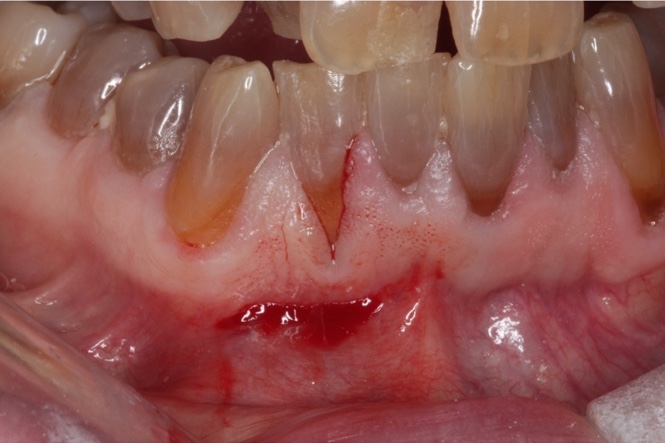
A front tooth with a large existing filling, extensive fracture, significant decay, or an older crown presents a different foundation. If little sound enamel remains, a veneer may not have enough reliable bonding area or may fail to protect weakened portions of the tooth. A crown can provide broader coverage and allow the dentist to rebuild form around the remaining structure.
That does not mean every filled or root-canal-treated front tooth automatically needs a crown. The amount and location of lost tissue, presence of cracks, remaining enamel, bite, discoloration, and existing restoration all matter. Research comparing full and partial coverage in anterior teeth supports a case-specific approach rather than a rule that one restoration should be used for every non-vital or damaged tooth.
Color can influence how much material is required
A small shade change is different from masking a deeply discolored tooth, a metal post, or a dark underlying core. Ceramic needs enough thickness and the right opacity to control the color beneath it without looking flat. If the restoration is made too thin for a demanding color change, the darkness may show through. If it is made overly opaque, the tooth may no longer resemble its neighbors.
Sometimes whitening, internal bleaching after root canal treatment, replacement of an underlying buildup, or treatment of decay can reduce the restorative challenge. Sometimes a crown offers more room for masking. In other cases, a veneer still provides the best balance of color control and preservation. Shade photographs, stump-shade information, and communication with the dental laboratory can be as important as the name of the restoration.
The bite can turn a cosmetic choice into a structural decision
Front teeth guide jaw movement and may receive substantial force during biting, clenching, and grinding. A patient with deep overlap, edge-to-edge contact, worn front teeth, or repeated chipping may load a veneer very differently from someone with light, stable anterior contact. The location of the ceramic margin and the direction of force influence whether a restoration is being used within a favorable design.
The dentist should examine the entire bite, not only the tooth that appears in a photograph. Opposing teeth, missing posterior support, existing crowns, jaw movement, and parafunctional habits may change the plan. A nightguard may protect selected restorations after treatment, but it does not replace thoughtful preparation and occlusal design.

One beautiful tooth still has to belong to the rest of the smile
Matching a single front tooth can be more demanding than restoring several teeth together. Natural teeth contain layers of color, translucency, surface texture, and light reflection. The gumline, tooth length, incisal edge, and contact with neighboring teeth must also align. A restoration can be technically sound and still look too bright, too opaque, too smooth, or too symmetrical for the person wearing it.
This is where a diagnostic wax-up, digital design, provisional restoration, or laboratory consultation may help. The objective is not to make the tooth perfect in isolation. It is to make the restoration disappear into the smile. That often requires restraint: preserving natural irregularities, matching age-appropriate texture, and avoiding unnecessary treatment of healthy neighboring teeth simply to make the laboratory’s job easier.
Sometimes neither a veneer nor a crown should be first
Minor chips may be repaired with composite bonding. A tooth that is out of position may benefit from orthodontic movement. Active gum disease, decay, or a root problem needs diagnosis before cosmetic coverage. A dark root-canal-treated tooth may respond to internal bleaching in selected cases. If the tooth is fractured below a maintainable level or lacks a predictable foundation, extraction and replacement may enter the discussion.
These alternatives are not automatically better or smaller. They simply show why the question should be framed as, ‘What does this tooth need?’ rather than, ‘Which cosmetic material do I want?’ The least invasive treatment is the one that solves the actual problem without creating a larger one.
Questions to ask at a front-tooth consultation
How much sound enamel and tooth structure remain, and where would the restoration bond or finish?
Is the main problem color, shape, position, fracture, decay, an old restoration, or several of these together?
How will my bite and any clenching or grinding affect the design?
Could bonding, whitening, orthodontics, or another treatment preserve more tooth?
How will a single restoration be matched to the neighboring teeth and gumline?
Veneer and crown planning in Belmont
Dental Restorative Group’s website lists veneers, crowns, cosmetic dentistry, restorative care, and comprehensive planning for complex cases. That combination is useful when a front tooth needs to look natural while also carrying a structural history that cannot be seen in a smile photograph.
If you are deciding between a veneer and a crown, bring earlier photographs and records if they show how the tooth changed. A consultation should explain what would be removed, what would remain, how the color and bite will be managed, and what alternatives deserve consideration. The goal is not to place the smallest restoration by name or the strongest restoration by reputation. It is to choose the most conservative design that can perform predictably on that particular tooth.
Frequently Asked Questions
Is a veneer always more conservative than a crown?
A veneer usually covers less of the tooth, but it is conservative only when the tooth position, color, enamel, contour, and bite allow an appropriately shaped and cleansable result.
Does a root-canal-treated front tooth always need a crown?
No. Remaining tooth structure, cracks, existing restorations, enamel, discoloration, and bite all influence the decision. Some teeth may be candidates for partial coverage or another approach.
Can a veneer hide a very dark tooth?
Sometimes, but severe discoloration may require more opaque ceramic, greater thickness, treatment of the underlying cause, or a different restoration. Color control should be planned before the tooth is prepared.
Can one front crown or veneer match natural teeth?
Yes, but a single-tooth match can be technically demanding. Shade, translucency, surface texture, shape, gumline, and laboratory communication all affect how naturally it blends.
Dental Restorative Group, 385 Concord Avenue, Suite 100, Belmont, MA 02478. Phone: 617-489-1470.
This article provides general educational information and does not replace an examination or individualized dental or medical advice. Diagnosis, timing, and treatment recommendations depend on the patient’s health and clinical findings.