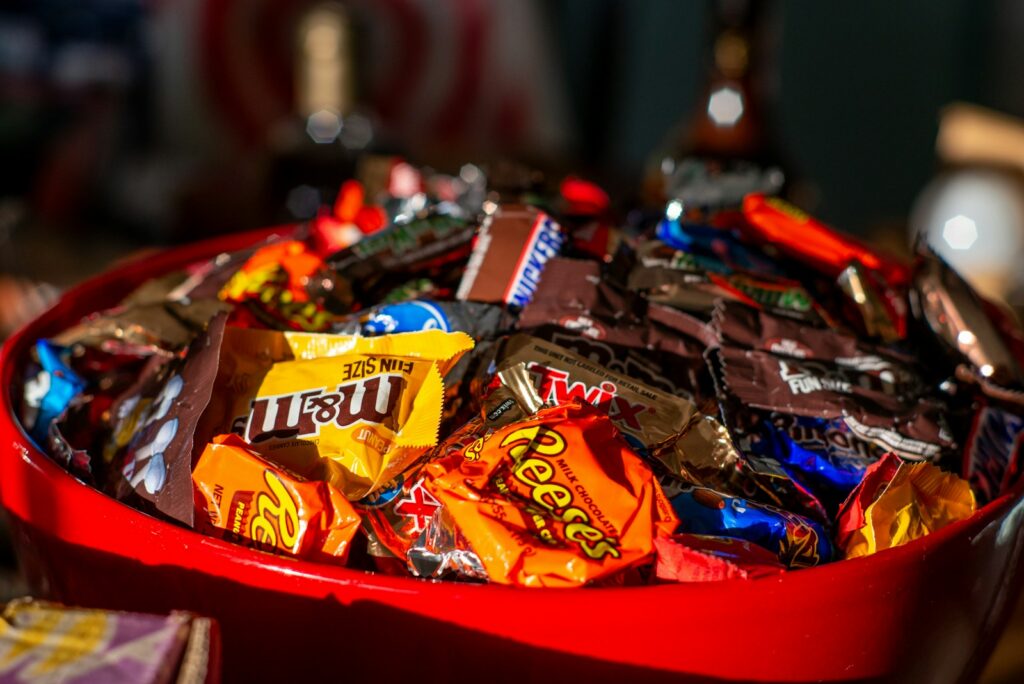
Halloween and candy are inseparable, and for most of us a little indulgence is part of the fun. But if you have teeth (and especially if you have dental work like crowns, veneers, or implants), it is worth knowing that not all candy is equally risky. Some treats are genuinely hard on teeth, while others are surprisingly forgiving.
The goal here is not to be the dentist who tells you to skip Halloween. It is to help you and your family enjoy the season with a little strategy, so a fun night does not turn into a cracked tooth or a cavity. Here is how the treats stack up, and how to protect your teeth and your restorations.
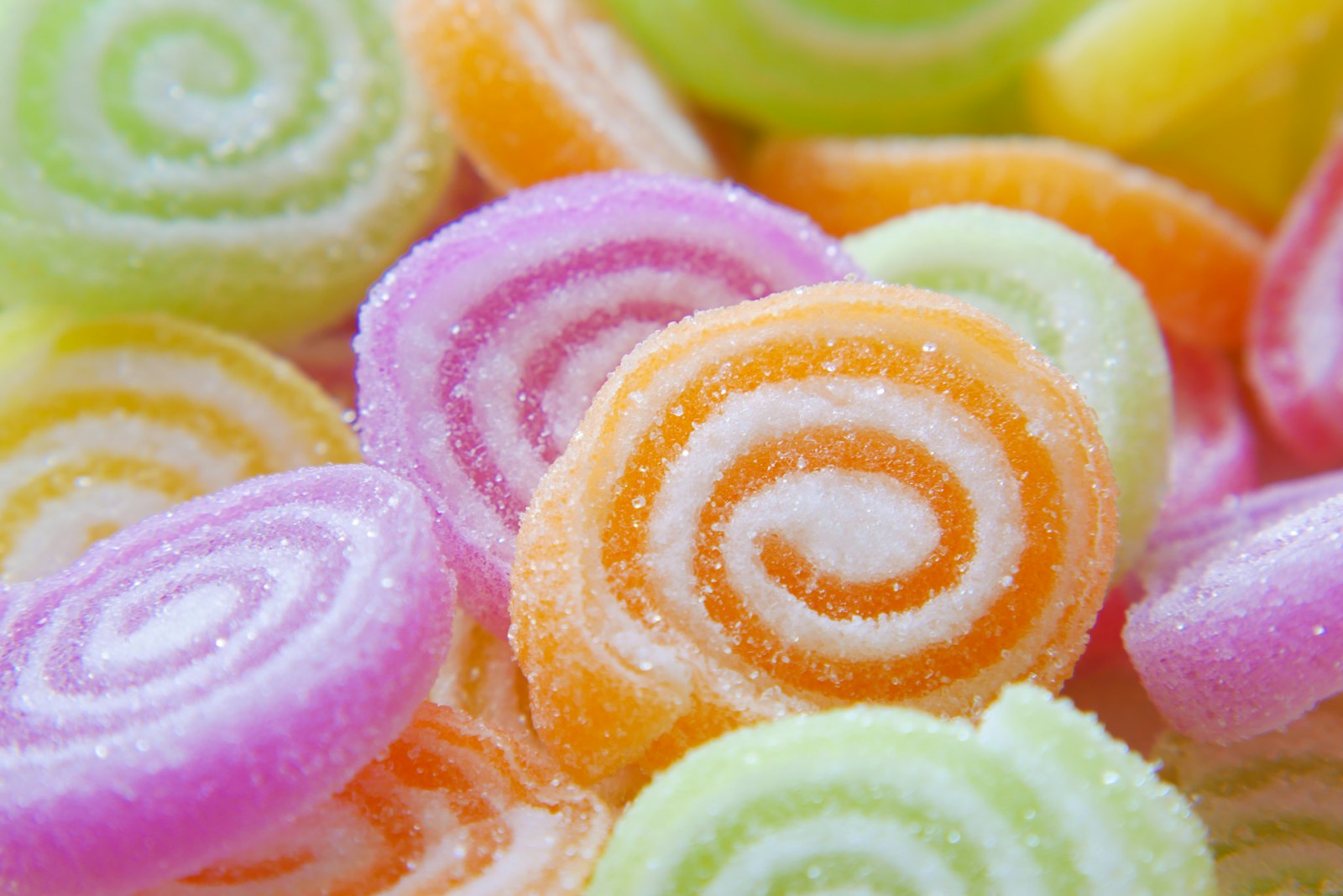
Why Some Candy Is Worse Than Others
Two things make a candy risky for teeth: how long sugar stays in contact with them, and how much force or pull it puts on the tooth. Cavity-causing bacteria feed on sugar and produce acid, so the longer sugar lingers, the more time that acid has to work. A candy that dissolves quickly is gentler than one that coats the teeth for an hour.
Texture matters just as much, particularly if you have dental work. Sticky and hard candies do not just feed bacteria; they can physically pull at or crack a restoration. That combination of prolonged sugar and mechanical stress is what separates the worst treats from the least bad ones.
The Worst Offenders
A few categories are worth treating with real caution, especially for anyone with crowns, veneers, bridges, or older fillings:
- Sticky, chewy candies (caramels, taffy, gummies): they cling to teeth and into grooves for a long time, and can tug a crown or filling loose.
- Hard candies and lollipops: they bathe teeth in sugar for many minutes, and biting one can crack a tooth or a restoration.
- Sour candies: these add a strong dose of acid on top of sugar, which softens and erodes enamel directly.
- Anything that tempts you to bite down hard, like frozen or very dense candy, which is a common way teeth and veneers chip.
None of these are forbidden. They simply deserve more care, and are best enjoyed with a meal rather than nibbled over a long evening.
The Least-Bad Treats
If you are choosing what to hand out or what to eat, some options are notably kinder to teeth. Chocolate is one of the better choices, because it melts and clears from the mouth quickly rather than sticking around, and plain chocolate is softer than most alternatives. Sugar-free candies and gum, especially those sweetened with xylitol, are gentler still, and sugar-free gum can even help by boosting saliva.
The theme is simple: treats that leave the mouth quickly and do not require a hard bite are the safest bets. A piece of chocolate with dinner is a very different thing from a lollipop stretched across a whole movie.
How the Treats Compare
| Treat | Risk to teeth | Why |
|---|---|---|
| Caramel, taffy, gummies | High | Stick to teeth and dental work for a long time |
| Hard candy, lollipops | High | Prolonged sugar bath; biting can crack teeth |
| Sour candies | High | Added acid erodes enamel directly |
| Plain chocolate | Lower | Melts and clears from the mouth quickly |
| Sugar-free gum/candy (xylitol) | Lowest | Little or no sugar; gum boosts saliva |
No candy is risk-free, but where a treat falls on this scale, and how long you keep it in your mouth, makes a real difference.
Protecting Teeth and Restorations
A few simple habits let you enjoy the season safely. Eat candy with or right after a meal, when saliva flow is highest and helps wash away sugar, rather than grazing on it for hours. Drink water afterward, and wait about thirty minutes before brushing if you have had something acidic, so you are not brushing softened enamel.
If you have crowns, veneers, bridges, or implants, be especially wary of sticky and hard candies, which are a common cause of a cracked restoration or a crown pulled loose. Protecting the dental work you have invested in is largely a matter of avoiding the few treats most likely to damage it.
When Halloween Leaves a Problem Behind
Sometimes a treat wins. If you bite into something and feel a sharp edge, a loose crown, or new sensitivity, do not wait and hope it settles. A chipped tooth or a dislodged restoration is far easier to fix early, and a quick visit can prevent a small problem from becoming a bigger one.
Enjoy the candy, protect the dental work, and if something does go wrong, we are here. To have a cracked tooth or loosened restoration checked after the holiday, contact our Belmont and Cambridge practice.
Frequently Asked Questions
What is the worst Halloween candy for your teeth?
Sticky, chewy candies (caramels, taffy, gummies) and hard candies are the hardest on teeth. They keep sugar in contact with teeth for a long time, and can pull loose or crack crowns, fillings, and other dental work.
Is chocolate better for your teeth than other candy?
Generally yes. Chocolate melts and clears from the mouth quickly rather than sticking to teeth, and plain chocolate is softer, so it is one of the kinder choices compared with sticky or hard candies.
Can Halloween candy damage crowns or veneers?
Yes. Sticky candies can pull at or dislodge a crown or filling, and biting hard candy can crack a restoration or veneer. If you have dental work, those are the treats to be most careful with.
Should I brush right after eating candy?
Drink water and brush, but if the candy was acidic (like sour candy), wait about 30 minutes first so you are not brushing softened enamel. Eating candy with a meal also helps reduce the damage.
What should I do if I crack a tooth on Halloween candy?
Have it checked promptly rather than waiting. A chipped tooth or loosened restoration is easier and cheaper to fix early, and prompt care can prevent a bigger problem.
Enjoy the Season, Protect Your Smile
A little strategy lets you enjoy Halloween without punishing your teeth. If a treat does leave a cracked tooth or loose restoration behind, contact Dental Restorative Group at 617-489-1470.
Dental Restorative Group, 385 Concord Avenue, Suite 100, Belmont, MA 02478. Phone: 617-489-1470.
This article provides general educational information and does not constitute dental or medical advice, nor a quote for treatment. Costs and clinical recommendations vary by individual; please consult a qualified dental professional about your own situation.