Occasional food between the teeth is normal. The more revealing problem is food collecting after nearly every meal in the exact same space between the exact same two teeth.
Floss may clean the area, but it does not explain why food keeps being directed there. The contact between neighboring teeth, the shape of a crown or filling, the chewing surfaces, the bite, tooth position, and the surrounding gum tissue can all influence the pattern.
Reasons Patients Seek an Evaluation for Repeated Food Trapping
A small complaint becomes useful clinical information when it is consistent and specific.
- Food collects in the same space after most meals
- The problem began after a crown, filling, or bridge was placed
- Floss snaps tightly but food still packs into the area
- Floss shreds, catches, or is difficult to remove
- The nearby gum bleeds, feels sore, or swells
- There is a persistent odor, taste, or tenderness
Significant swelling, drainage, increasing pain, or a loose tooth or restoration deserves prompt dental attention.
First Question: Where Is the Food Being Directed?
Food impaction is not diagnosed by whether floss feels tight or loose alone.
The contact area. A weak, open, or differently shaped contact between neighboring teeth may allow food to enter the space.
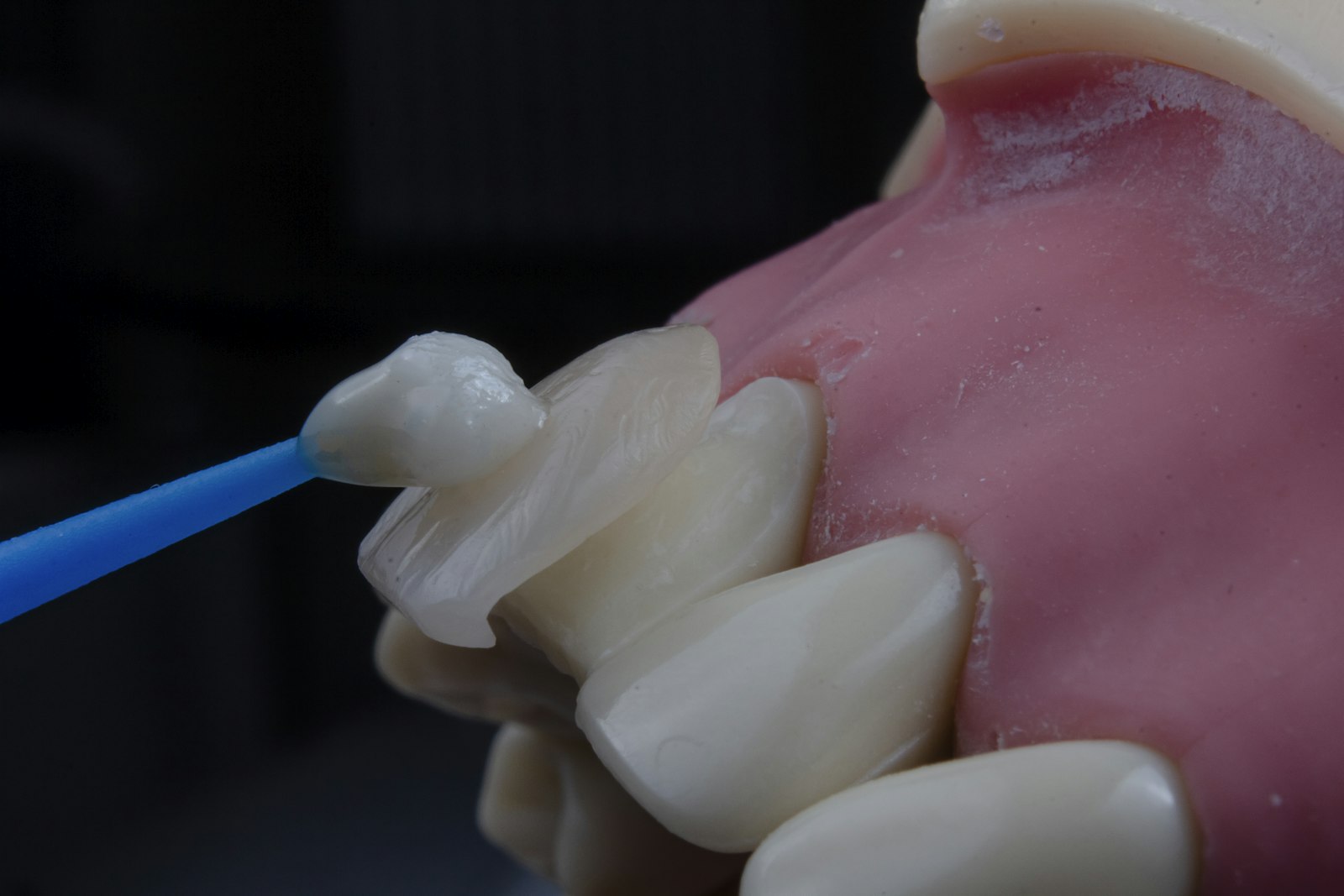
The restoration contour. A crown or filling has side contours that help guide food. Small differences can influence where food travels during chewing.
The chewing surfaces and bite. The way opposing teeth meet may direct food toward a contact even when floss passes with a firm snap.
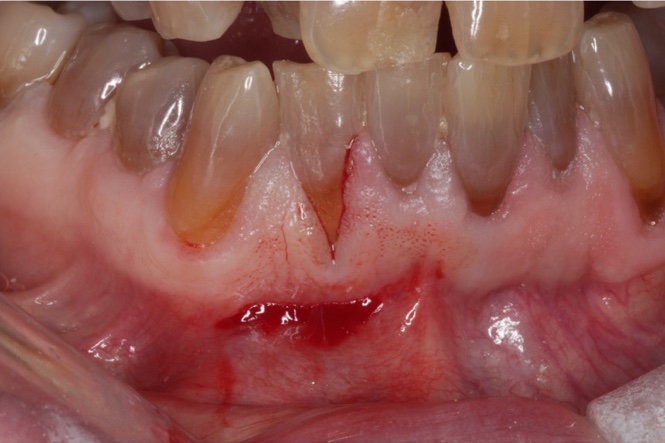
The gum and supporting tissues. Tissue shape, bone levels, tooth position, and inflammation may affect both food collection and the ability to clean the area.
What a Comprehensive Food-Trap Evaluation May Include
The dentist may review when the problem began, which foods trigger it, and whether dental work preceded it. The examination may include the contact, restoration margins, gum tissues, the bite, and dental imaging.
In a mouth with multiple restorations, the dentist also evaluates how crowns, bridges, implants, and natural teeth function together over time.
Why the Bite and Restoration Design Deserve Attention
A tight floss contact does not solve every food-impaction mystery. Food moves under chewing force, and the grooves, ridges, and position of the teeth can direct it toward a particular space.
The goal is to understand why food is being directed there. The cause may involve the restoration, the bite, the tissues, or several factors together.
Bring the Timeline With You
Before the appointment, notice when the problem began and which foods collect most often. Note if the area bleeds or if the complaint started immediately after treatment.
Previous X-rays and the date a crown was placed can help establish the sequence. A clear description of what changed is especially valuable when work was done by different clinicians.
An Evaluation Does Not Always Mean Replacing the Crown
Patients sometimes worry that mentioning food trapping will automatically lead to a new crown. Options may include hygiene changes, smoothing a restoration, or modifying the bite.
Replacing dental work is worthwhile only when the reason for the problem is understood. A new restoration that reproduces the same contour may reproduce the same complaint.
Questions to Ask at the Consultation
- Is the food entering because of the contact, contour, bite, or gum tissue?
- Could the problem be related to a recent crown or filling?
- Why does food trap even though floss feels tight?
- Can the area be improved without replacing the restoration?
- What changes would mean the area needs prompt reevaluation?
Food-Trap Evaluations in Belmont
Dental Restorative Group provides restorative care involving crowns, bridges, and implants. The practice serves patients from Belmont, Cambridge, Boston, and surrounding communities.
There is nothing silly about a problem that affects every meal. Saying, “Food gets stuck here every time I eat,” gives the dentist a precise place to begin.
The most useful appointment connects the daily complaint to the contact, contour, tissues, and bite instead of treating it as a flossing failure.
Frequently Asked Questions
Is it normal for food to occasionally get stuck between teeth?
Yes. Occasional food trapping happens to everyone. A problem that repeatedly occurs in the same location deserves more attention.
Why did food start getting stuck after my crown?
Restoration contour, contact relationships, and chewing forces may contribute. An examination is needed to determine the cause.
What if floss feels very tight between the teeth?
A tight floss contact does not explain every type of food impaction. Tooth shape, restoration contour, and bite can also matter.
Does the crown always have to be replaced?
No. Treatment depends on the cause. Replacing a restoration is not automatically necessary.
Dental Restorative Group, 385 Concord Avenue, Suite 100, Belmont, MA 02478. Phone: 617-489-1470.
This article provides general educational information. Decisions regarding replacement of a missing tooth depend on individual oral health, anatomy, function, restorative history, and treatment goals.